While Madison Beer was performing, a man was thought to have pointed a gun at Madison after shouts of 'GUN!' was heard. Police reports confirm that there was no actual weapon involved. 🙏
— Music News Facts (@musicnews_facts) May 26, 2019
Noone was injured and the man was permanently ejected from the festival. pic.twitter.com/mcs5ZQqDuS
Madison Beer Was Performing @ BottleRock Music Festival When There Was A “Gun Scare” From The Crowd.
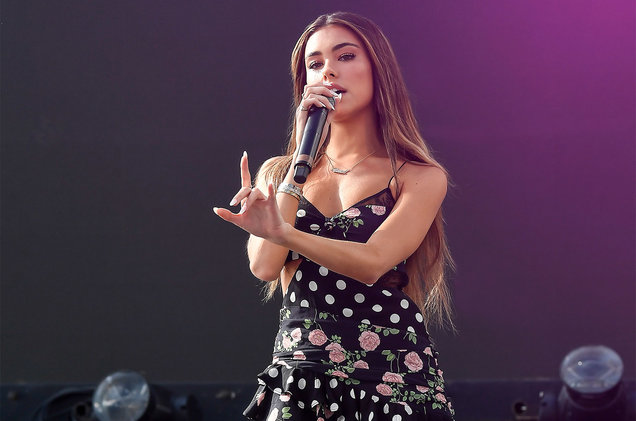
Madison Beer was performing at the BottleRock Music Festival in Napa, California when there was a “gun scare” from the crowd. Madison said that someone in the crowd looked like they were pointing a gun at her and some of the fans in the crowd were yelling “GUN!” She ran off the stage, cutting her whole set short to run to safety. TMZ reported that the person was found and banned from the premises, but no weapon was actually involved.
We do not know the gesture that the man made towards Madison to make her and those around him to believe he was pointing a gun, but it was a very scary experience for everyone involved.
Watch clip below:
J-Pop Star Sakurako Ohara Tour & New Single

J-pop singer-songwriter Sakurako Ohara goes on her tour called FROM NOW ON. Since she got started in film as an actress, her tour is geared towards her journey throughout the entertainment industry and is more dance-heavy.
She will also be releasing her single, dropping July 31. This single will be featured as the opener for an upcoming drama series she will be starring in as well.
Karen Lawson Joins Spotify as Managing Director for Australia and New Zealand
Karen Lawson is the new managing director of Spotify’s operations in Australia & New Zealand.
Based in Sydney, Lawson previously served as CEO of start-up accelerator Slingshot, a post she exited in July of last year.
Prior to that, she was chief of recruitment platform careerone.com.au and her CV includes eight years in various roles with Yahoo7, rising to GM of business developments and partnership in 2013.
Lawson is the third executive to lead Spotify in Australasia since the streaming service launched in these parts in 2012. Kate Vale, the founding managing director, left in June 2017 and was succeeded by Jane Huxley, the former head and founder of Pandora’s now-shuttered Australian affiliate.
Huxley left in February for a new role as Spotify’s managing director for EMEA (Europe / Middle East / Africa), based in London.
“I am thrilled to be joining Spotify as MD for Australia and New Zealand. It’s wonderful to be part of a business which is so loved by millions of people around the world,” Lawson tweeted.
With this new gig, Lawson will report into Spotify’s global head of markets, Cecilia Qvist. Among her duties, Lawson will be expected to grow the A$24.9 million in revenue which Spotify Aus/NZ generated from ads on its “freemium” tier in 2018, up slightly from $24.3 million in 2017, according to the Australian Financial Review, based on documents lodged with the corporate regulator. A spokesperson declined to comment on the new appointment, which is said to take effect from June 24. In a world first, Spotify last year began testing its Active Media feature, which allowed millions of users of its free service in Australia to skip ads as a part targeted marketing initiative.I am thrilled to be joining Spotify as MD for Australia and New Zealand. It’s wonderful to be part of a business which is so loved by millions of people around the world.
— karen lawson (@karenlawson2025) May 23, 2019
Brandon Niederauer Kills It On Electric Guitar National Anthem @ Chicago Cubs Game

On the Wrigley Field, Chicago Cubs welcomes young electric guitar soloist Brandon “Taz” Niederauer to play the National Anthem to kick off the home game vs. the Cincinnati Reds.
Unfortunately, the cubs did not win, but watch Brandon shred his way through the National Anthem below:
Robert Plant Launches Podcast ‘Digging Deep’
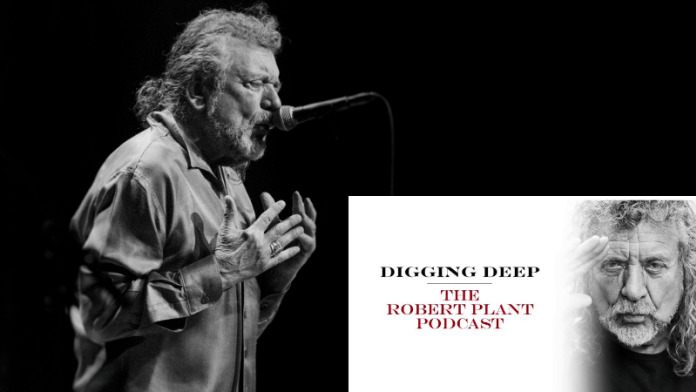
Robert Plant will be releasing his own podcast called ‘Digging Deep’ June 3rd on iTunes, Spotify, Acast, YouTube, and all other major platforms. In the podcast, he reflects on his past work and personal experiences in the music industry. He expands on pivotal moments, people, places and learning experiences that’s shaped, molded, and inspired his music.
If you want to listen to the trailer, click here.
Anderson .Paak Welcomes Lil Nas X To The Stage To Perform “Old Town Road” @ Boston Calling Music Festival
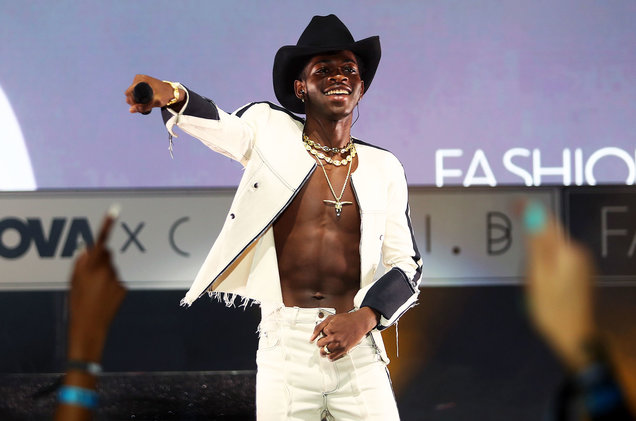
Anderson .Paak surprised the fans by welcoming Lil Nas X to the stage. Wearing his white cowboy hat and leather flamed get-up, he transitioned into hit song “Old Town Road.” The cameras went up, and the crowd went wild.
This was a complete surprise, because the line-up only mentioned Lil Nas X as a special guest with no further details. No one knew he was going to perform the legendary country anthem until the moment he entered the stage.
James Blake Performs @ The New Studio For LA Radio Station KCRW
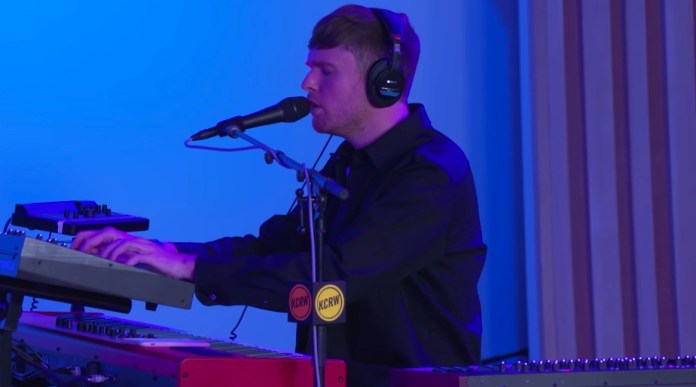
James Blake had the privilege of performing the first live-set at KCRW. He played his hit song “Retrograde,” as well as most of his songs from his latest album, Assume Form.
Watch Blake’s live performance of “I’ll Come Too” below:
Tune in to Morning Becomes Eclectic KCRW between 9 a.m. and noon every day!
The Ticketing of Tomorrow: How the Marketplace is Changing

The past year has demonstrated that the live event industry is as vital and popular as ever. According to Billboard, Ed Sheeran’s 2018 Divide Tour grossed more than $429 million, breaking an all-time record for the highest-grossing solo tour and highest year-end gross ever. His North American promoter, Louis Messina, was also responsible for big touring numbers for Taylor Swift, Kenny Chensey, Blake Shelton, Eric Church, George Strait and Shawn Mendes, among others, that totaled $670 million across 268 shows and 5.2 million tickets.
With such large metrics, the concert industry has shown that consumers are still hungry to spend money on live event experiences. Findings from a recent Nielsen report also support this sentiment: 52% of Americans attend some form of live music event each year. While live event attendees spend an average of $247 per year on tickets—in addition to spending on merchandise, music, and alcohol—the reality is that it likely means two events a year as primary ticket prices have soared.
What all these numbers reflect is the push and pull of primary and secondary markets on pricing, with fans’ access to tickets teetering in the middle. The potential solutions to these issues aren’t black or white, but grey.

Stephen Glicken
from Project Admission
Take Swift’s global Reputation stadium tour. She grossed $315 million dollars on a tour that, for the first time, attempted a “slow ticketing” onsale which saw dynamically priced tickets rolled out at sticker-shock prices. Though it was Swift’s most financially rewarding tour to date, thanks to the aggressive pricing that stymied secondary sales, some dates had thousands of unsold tickets. That’s a less-than-ideal experience for an artist and their fans when the expectation is a sold-out show. The balance of revenue versus volume is off kilter.
Then look at Garth Brooks’ approach to combating the secondary while keeping ticket prices affordable: readily acknowledge that you’ll keep adding shows in any given market to meet demand. What this translated into was a three-year tour in the U.S. where Brooks performed 390 shows, sometimes two in a day, to sell more than 6.5 million tickets at an average price of around $60. Doing this on an arena-level scale was unheard of but it was highly effective in nullifying the secondary market and making sure his fans got tickets at the price he wanted to charge.
Clearly, Swift and Brooks are outliers when it comes to pricing and ticket distribution. So how does the rest of the industry balance demand and pricing in 2019?
The answer is both technical and philosophical.
Despite advancements in ticketing over the last several decades, it is only now that solutions exist to solve for some of its most difficult problems.
Specifically, for years, ticketing platforms have issued tickets as PDFs—easily duplicated, non-trackable files. As physical commodities, they are significantly more susceptible to fraud than traditional tickets as a broker can resell the same ticket multiple times and only the first one scanned at the venue is admitted. Moreover, the understanding of the customer begins and ends with the initial purchase as there’s no way to tie their identity to the ticket.
Intertwined with this reality is that fact that primary ticketing companies are economically incentivized to keep tickets within their own ecosystem not only to capture resale revenue but to get a more comprehensive understanding of end-users who actually attend the event.
The industry is increasingly moving toward identity-based tickets that act as a license to enter an event. Similar to airline tickets, these tickets are not just a barcode that anyone could duplicate and resell at will but rather come with flexible rules and restrictions that determine how, where and for what price they can be resold or transferred. This protects the ticket and enables content owners to know exactly who uses the ticket. This powerful data can be leveraged for better marketing, more relevant sponsorships, and increased safety and security within the venue.
This new ability to effectively track and control the journey of a ticket from sale to redemption, regardless of how many times it’s resold or transferred, gives artists the ability to manage their tickets in ways that allow them to anchor themselves at the axis between fans and ticket pricing.
Primary and secondary markets for live events have been around for a long time—even Charles Dickens’ live readings faced outrage over “ticket speculators.” Online ticketing, developed in the 1990s, has effectively catalyzed the merging of the two.
For years, a vast amount of consumers have checked secondary sites such as StubHub and SeatGeek for ticket availability before ever visiting primary ticketing websites. Secondary sites such as these have succeeded due to their effective marketing, ease of use and readily available inventory.
The excessive stigmatization of the secondary market misses the reality that a vast amount of tickets go unsold—about 40 percent in total. Without the secondary market, which is often selling tickets at below face value, that number would soar even higher. To date, a large part of secondary markets’ success has been due to the fact that they can adjust ticket prices in any direction at any time.
Unrestricted in where and how tickets can be sold, secondary companies have become massive distribution hubs, drawing eyeballs from smaller secondary websites as well as media and other ecommerce companies looking to offer their visitors access to tickets.
At the behest of artists, promoters and venues, this has, in turn, forced primary ticketing companies to become more amenable as to where and how tickets are sold outside of their websites whether that’s API development or allowing tickets to be sold off-platform.
With the development of better technology, any and all distribution channels can be used to sell those tickets and all involved can know who’s purchasing them and ultimately using them.
The practical shift in how to effectively sell more tickets has led to a broader philosophical one. It’s not about the primary market versus the secondary market anymore—it’s simply about the market.
To learn more about Stephen or follow him on social:
Twitter: @PAExchangeHQ
LinkedIn: https://www.linkedin.com/in/stephen-glicken
Crimson Apple Drops New Hit Single & Official Video “Somebody” – Watch
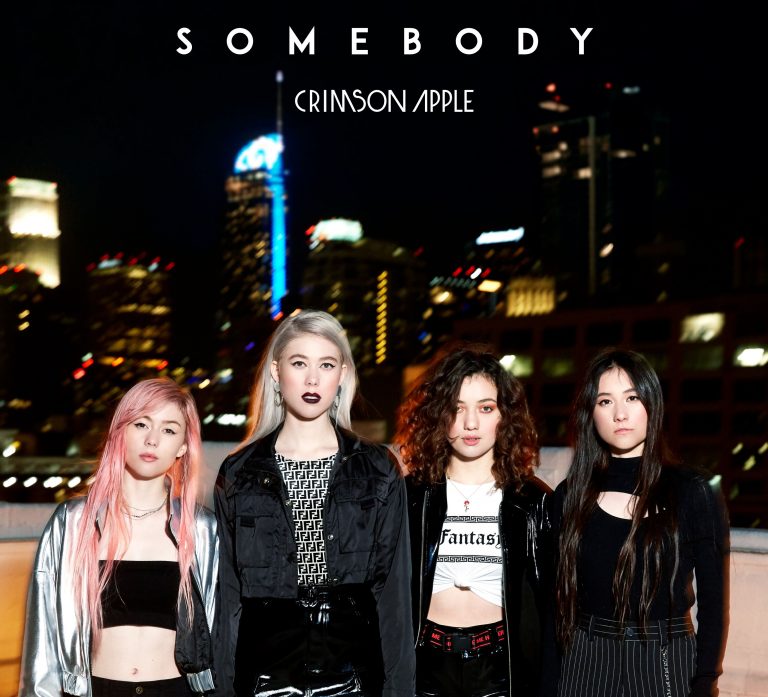
Crimson Apple have released their new hit single and official video “Somebody” and it has caught the attention of Music Industry Weekly. It was co-written and produced with the esteemed Japanese producer, Satoru Hiraide. The track can be purchased here. It will also be featured on Crimson Apple’s upcoming EP to be released later this year! For more information on this sister group, visit their website: https://crimsonappleband.com/.
Stream the song on Spotify and watch the official video below:
Hailing from Hawaii, Crimson Apple is Colby Benson (lead vocals/keyboards), Shelby Benson (guitar/vocals), Carthi Benson (bass/vocals) and Faith Benson (drums). Since the band’s inception in 2012, the four sisters have shared stages with such venerated artists as All Time Low, Plain White T’s, One Republic, Switchfoot, and Hawaiian music legends, HAPA. The group’s 2015 self-released debut album, Hello, garnered commercial success in Hawaii and across the internet, earning spins on iHeartMedia and Star 101.9, as well as nominations for Alternative Album of the Year, Most Promising Artist of the Year, and Group of the Year at the Na Hoku Hanohano Awards–Hawaii’s equivalent of the Grammy Awards.
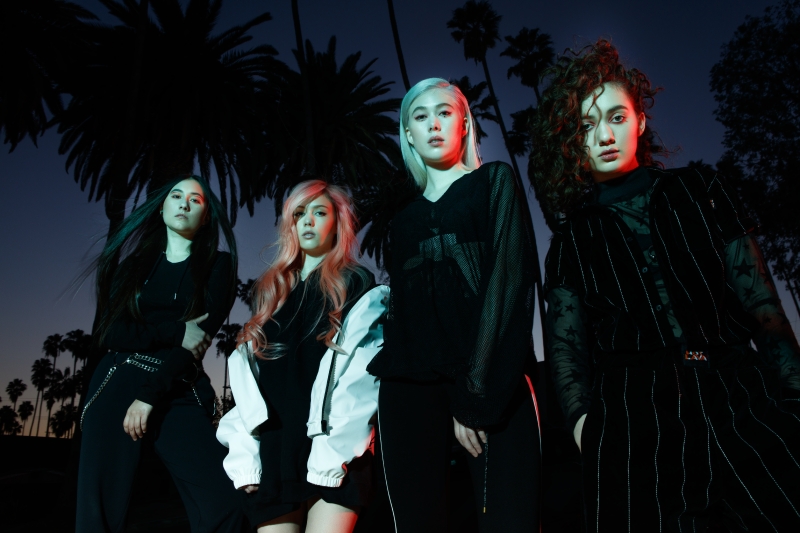
Since relocating to Los Angeles, Crimson Apple have performed in numerous venues across America, signed a management and recording deal with Amuse Group (Perfume, BABYMETAL, ONE OK ROCK) and landed spots on the High School Nation Tour. For their upcoming EP, the Benson sisters are collaborating with producers from the US, Japan and UK. Prior to “Somebody,” Crimson Apple released their single “Can’t Get Out of Bed,” which was written in collaboration with female writer/production team LYRE (Alina Smith & Elli Moore) and praised by Refinery 29, who noted, “The four sisters [of Crimson Apple] are seemingly inseparable, and their vision for the band is strikingly clear.” With undeniable chemistry on and off stage, and a musical bond only sisters could share, Crimson Apple seem to have all the makings to be pop music’s next big thing.
Visit Crimson Apple:
https://www.facebook.com/crimsonappleband
https://www.instagram.com/crimsonapple/
http://www.crimsonappleband.com https://www.facebook.com/crimsonappleband Tweets by CrimsonAppleXO https://www.instagram.com/crimsonapple/ https://www.youtube.com/user/CrimsonAppleBand
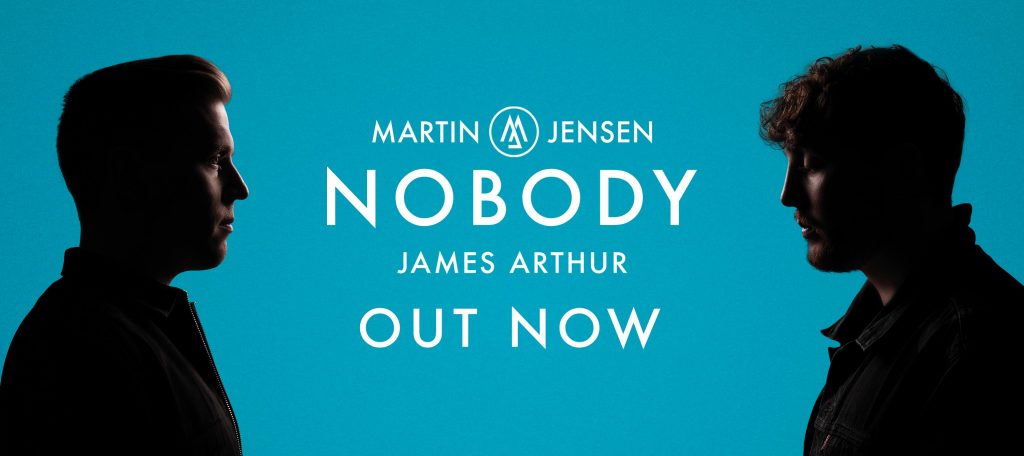
Martin Jensen’s Recent Music Video ‘Nobody’ Is On The Rise: Watch Now
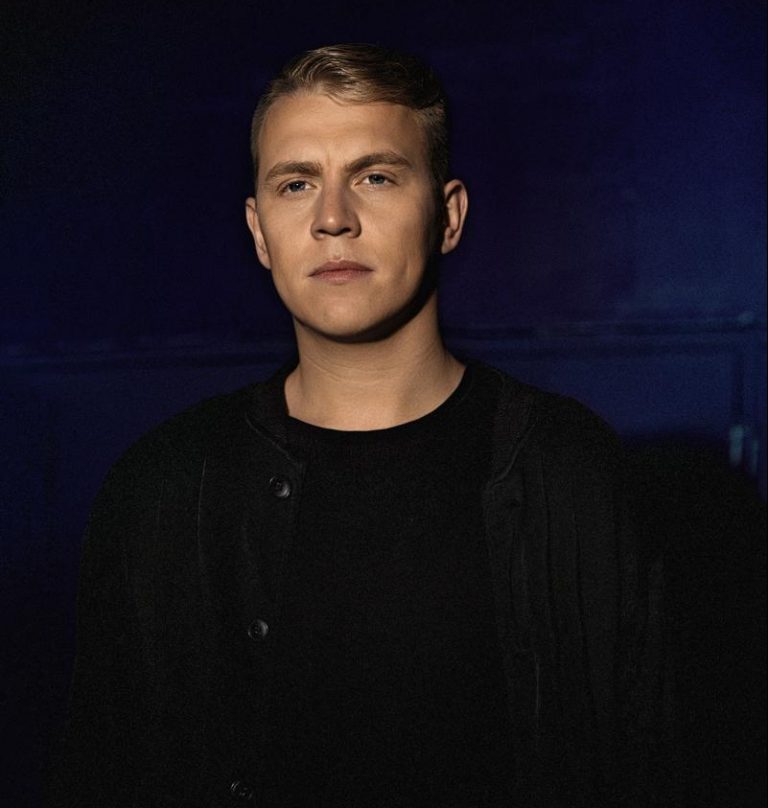
Multi-platinum selling DJ and producer Martin Jensen and global superstar James Arthur have released the official video to summer anthem, ‘Nobody’.
The video follows a young man’s night out with friends in a pub where both Martin Jensen and James Arthur are working behind the bar. After sharing a moment with a woman across the room, the man moves to meet her only to be found caught in a time loop, repeating the same night over and over. Eventually, after breaking a series of bad decisions, the time loop is broken with the protagonist leaving the bar arm-in-arm with the mystery woman.
Watch official video below:
Danish producer Martin Jensen is best known for his 2016 breakthrough hit ‘Solo Dance’ (over 500 million Spotify streams), which earned multi-platinum certification in over 14 countries. Since then, the producer’s range of pop-focused singles have seen the him rack up collaborations with acts like The Vamps and amass over one billion Spotify streams in his career to date.
Securing a spot in DJ Mag’s ‘Top 100’ list for the past three consecutive years, Martin has performed across various stages including Tomorrowland and Lollapalooza, as well as London’s iconic Ministry of Sound club for his sold-out headline performance in February.
No stranger to dance music collaborations, James Arthur previously teamed up with US superstar Marshmello on his 2018 hit ‘You Can Cry’. Selling over 25 million records globally, James also recently became one of only 10 artists to have ever achieved over one billion Spotify streams on a single record – joining an elite club which includes Drake and Justin Bieber – thanks to his No.1 global hit ‘Say You Won’t Let Go’.
A stunning fusion between the vibrant melodic style of Martin Jensen, and powerful vocal delivery of James Arthur, ‘Nobody’ looks sure to secure a spot as one of 2019’s biggest hits.
For more information on Martin Jensen, please visit:
Facebook | Twitter | Soundcloud | Instagram