When music is your side gig: how to stay motivated, efficient, and sane

0

If you’re a part-time musician, you know the struggle. You want to make music, but you run out of time in a day. Or you lose heart. Or your music time is not as efficient as you want it to be.

Every day, it’s an uphill battle of sticking with it, being productive, and not losing your mind.

But there are practical things you can do today — right now — that can really help you keep going and be happy along the way.

How to stay motivated

Motivation is something that can be difficult to hold onto when music is your side gig. We get overwhelmed with all of the things we could or should be doing to move our music careers forward.

Hustling day after day with little progress can suck the go-getter-ness right out of you. So here are some tips to combat that temptation to lose motivation.

Just do one thing a day

This idea has changed my life as a part-time musician (I’m not exaggerating): do one thing today that will move your career forward, even the least little bit.

Don’t think of all the things you want to be doing — all the things that could boost your career. Just think of one of those things. Then do it.

Take a big task — like building a music website — and break it into steps. What part of that process can you do right now with the time you have? Then tomorrow, you can do another step in that process.  

If you only have 15 minutes to do something, get something done in that 15 minutes. Then you can go to bed knowing you pushed your music career a little further forward.

Remember the big picture

When you’re in the trenches every day, it’s so easy to forget where you’re headed. When you see your friends or other musicians on social media growing their fan base like crazy, remember the big picture.

Take a few minutes every day to zoom out and look at where you, specifically, are going. What does success look like to you? What is your ultimate goal here?

Write it down and tape it to your wall. Then look at it every day and remind yourself of your goals and your finish line.

Join a Facebook or Reddit group of fellow musicians

You know that we humans rely on each other. And I think this is especially true of the music community.

DIY musicians, whether part-time or full-time, are generally a welcoming and helpful bunch of people. In my experience, they’re encouraging, motivating, and want to see you succeed. That’s why it’s a great idea to connect with them in Facebook groups or subReddits.

Here are a few music-related Facebook groups that are super helpful:

And if you’re a Redditor, here are a few subs I’d recommend subscribing to:

How to be efficient

Maybe you had a stressful day at work. Maybe you just got the kids to bed and you’re exhausted. Or maybe you’ve got school work that’s due tomorrow.

In each of these scenarios, you’re not left with very much time to do music. And getting stuff done in the little time you have is so difficult, so here are some tips for staying efficient despite the lack of time.

Schedule stuff

If you know you’ll have Tuesday nights free, then take that opportunity to call it a “music-making night” for yourself. Or if you have early mornings open, schedule that time for your songwriting sessions.

These are just examples, but you get the point. Find the free time in your calendar, pull out your phone, and put stuff in your calendar app (or a paper calendar if you still use one of those). And don’t forget to set a reminder on your phone.

This way, you’re holding your future self accountable to be efficient with your music time.

Make a to-do list

Staying organized is a huge aspect of being efficient. And one way to keep your shiz together is to make a to-do list.

Using whatever format you want — spreadsheet, notepad, stickies — write down the things you want to get done, say, this month. That way, when you sit down to write songs, record music, email a music industry pro, or whatever, you know exactly what you need to do next.

Plus, as you cross things off the list, it’s a little encouragement that you’re making progress.

Set a timer

This tip is especially useful if you’re super strapped for time.

When you sit down to do a thing — something that will move your career forward — set a timer. Whatever time you have. Fifteen minutes, an hour, two hours — set a timer to help you focus 100% on the task at hand.

For some people, this may sound like a stressful idea. I get that. But maybe this tip can help you break through that stress and get stuff done.

Keeping your sanity

If you lose your sanity as a musician — especially when music isn’t your full-time career — everything else goes down the drain. The whole thing relies on you taking care of yourself mentally, emotionally, and physically.

Don’t compare yourself to others

I’ve learned this tip from experience. I’ve compared myself to other more successful (“better”) musicians and gone into a deep hole. The type of hole where I’m discouraged all day and don’t get very much done at all.

So instead of wishing you had some other musician’s success or opportunities, put your blinders on and remember that you are you. Your story of success will look different than every other artist’s.

Close Instagram. Stop watching YouTube videos of musicians you think are better than you. Re-focus your attention on you and how far you’ve come.

Get sleep

Sleep is super important. When I don’t sleep enough, I’m like a different person. And not a nice person.

Many artists brag about getting very little sleep because they’re so committed to winning. And that’s great. Good for them.

And, yeah, you may have to go through seasons where you’re not getting a ton of sleep. Maybe you’re working on a project that you’re super passionate about and it’s taking some time. That’s fine, but give yourself a break every now and then.

For the sake of your own sanity and your music career, don’t forget to get a good night’s sleep.

Caleb J. Murphy is a songwriter-producer based in Austin, Tx., and the founder of Musician With A Day Job, a blog to help part-time musicians succeed.


What Should I Consider Before Hiring a Music Publicist? (Help!)

0

This guest post by Brittany Brave originally appeared on the Soundfly Blog Flypaper 

There’s no denying the value of having a publicist in your camp. Today’s music publicists double as digital strategists, often serving a key role in the actual distribution of new releases (through exclusive premieres, for example). They have the pulse on how fans and industry alike discover and respond to artists, and keep an eye on that artist’s overall brand.

Over the years, though, paid publicity has earned the false reputation of being a be-all end-all device for how to achieve overnight success. Too many one-off stories of bands blowing up with just a few well-timed media placements, combined with a common misunderstanding of how the entire industry process — marketing, A&R, publishing knowhow, and growth strategy — even works, has led bands to invest in publicity campaigns too early, for too much money, or with too high expectations. And any kind of disappointing experience will often leave bands feeling like they’ve made a big mistake, and hesitant to try it again down the road, even at moments when they might really benefit from a publicist.

That’s why I wanted to demystify the process of hiring a publicist, and cover some of the considerations you might want to make before looking for one. But before I do, if you’re really serious about working on your next promotional campaign, your branding, and your media presence, Soundfly has a team of Mentors ready to help you with that, and get you prepped for undertaking your next big PR lift. Check out the Headliners Club, and tell them what your musical goals are here so they can help get you to the next level of your career!

[How to Get Publicity to Promote Your Music]

PR is called “earned media” for a reason.

Okay, so, unlike advertising, there is no guaranteed exposure when it comes to publicity. Influential print and digital media are notoriously limited, so the topics and faces that cut through the noise and make headlines do so based on qualities like newsworthiness, timing, and mass appeal. Yes, the internet has welcomed a rise in blogs and social media, and various other forms of “long tail” digital real estate that artists can occupy, but these principles still hold true. Not everyone can be covered. Not everything is ready to be talked about. Not every artist has a story — not yet, at least…

The subjective qualities for coverage are whether an editor or writer likes your music. This usually can’t be cheated. We’re asking journalists to connect with a recordenough that they’ll produce something about it, and that’s a hard sell. In general, it can’t be forced. The objective qualities that get musicians coverage are writing and production credits, touring and shows, unique traits, affiliations, existing relationships, doing things outside of the box, and often, traction in other areas (radio, sync placements, industry interest, your web presence, etc.)

For younger artists, or artists taking the plunge into their first-ever campaign, this can make securing coverage and seeing results frustrating at first. There’s no “head start” for publicists. While firms may put in the extra time and effort to ensure the media pays attention to the music, they still can’t guarantee the press will like it or act on it. That’s the job of the artist.

Music media, in general, is saturated.

The music PR playing field is jam-packed. You have to assume that editors and writers are simply flooded with pitches and correspondence, because they probably always are. If a publicist happens to hook one’s interest, sometimes there aren’t enough writers on staff or hours in a day for a publication to cover every song and album that deserves their attention. The best thing you can do to break through the noise is to hustle during the early stages of your career, send songs all the time (even if they’re unlikely to get airtime or coverage), and build relationships with as many journalists as possible.

The more connections and name-recognition you have among journalists, the more the right taste-making publicist will be able to do for you.

There’s no shortcut to building a story. The longer you’re in the game, the more there will be to talk about. At some point in an artist’s development, the ratio flips from chasing coverage to fielding requests. It takes signing up for the long haul, but that’s when press is the most lucid and effective.

“The more you have going on, the richer and more textured the editorial. Publications love that. Hire a publicist to communicate the conversations happening around you — not to single-handedly create it.”

A publicist can’t exist in a vacuum.

Publicists use talking points to create more talking points. If you’ve got an empty tour calendar, limited music and video content, low social numbers, or other glaring holes in your newsworthiness, it’s probably not the right time to hire a publicist. Many artists start PR campaigns, and then disregard deadlines to submit their album for distribution, or don’t have mastered files or even finished artwork at the ready.

Any one of those missing elements is a threat to your overall success and a chance for your growth objectives to be derailed. Your campaign is as productive as you are. And you’re ultimately responsible for staying on top of your product. Your publicist’s job is to talk about it.

Therefore, a publicist is best-suited to approach outlets when they’re armed with new music, tour dates, recent accomplishments, and a timeline. Publicists are chameleons, who, often to their fault, take on too many tasks they’re not designated to complete. I’ve helped book shows, update websites, and form release plans — none of which is really in my wheelhouse — just to help make sure my client stands a chance of being heard above the noise. Any of those tasks will pull your publicist away from the work you hired them to do — start conversations with media and influencers.

Publicists rank in importance with a band’s manager and agent — the three forming a trifecta of table-turning roles that, when entering into the picture at the proper time and under the right conditions, can accompany, not carry, an artist from point A to point B. The music industry has seen many new moons in the last two decades, but persistence, hard work and talent will always be a winning formula. You’re probably not going to be one of the 00.00001% of artists who get famous overnight.

The more you have going on, the richer and more textured the editorial — publications love that. Wait until the moment that you have a story to tell and conversations happening around you, and the right publication will help spread that story to the world; but they can’t single handedly create it for you.

Made of coffee and chord progressions, Brittany Brave is a NYC writer, comedienne and founder of BRAVE PR. She’s also tiny, powered by ideas, always talking loud and walking too fast. Follow her at @BritBrave

Tips for getting your solo music career started

0

This guest post by Kenneth Estrada y Santiago originally appeared on the Soundfly Blog Flypaper 

Over the last 15 years, I’ve been part of seven different musical projects. I’ve played in all kinds of bands: a shoegaze trio, an experimental metal duo, an electronic pop group, an indie rock band, an ambient octet, a punk rock quartet, and a German teen pop group.

I ended up leaving all of them. Why? For various reasons, sure, but all with the same thread of ambition attached: I had a vision for myself and my own music making that these projects weren’t entirely satisfying. I wanted to write my own songs. But most importantly, I didn’t want to fight for every single idea I had in my head anymore.

Writing music together, in collaboration, and compromising on your vision in order to make space for a variety of ideas and voices, can lead to an incredible creative output. It’s one of the great joys of being in a band, and it’s a fascinating process to watch and become involved in when it works. But there comes a time when every artist should seek to be able to transmit their vision and voice without compromise. For artists who start craving that freedom, it will always feel like something is missing when they show up to band practice. That’s how you might realize it’s time to think about starting your solo career.

Before you make the move

Don’t get me wrong — just because you’re looking to start a solo project, that doesn’t necessarily mean you have to leave your band right away. There are special bonds in every long-term band relationship, and you should always try to keep them intact. You’ve shared so many memories, and you’re probably closer with your bandmates in some ways than you are with some of your best friends.

So don’t drop everything at once unless it really is time to do so. The creative gap can be filled without having to replace one with the other. Take time to explore some ideas on your own and really think, “Would this sound better with the other members playing, or just myself?” Perhaps some of the ideas you come up with will suit one project and not the other. See where it leads and feel it out — there’s no need to rush.

I had to form five bands until I finally realized that a solo project is the only way for me to do exactly what I’d wanted to do all along. And this isn’t even my first attempt at a solo career! When I first decided to go solo, I still had to decide what musical influences I actually wanted to emulate, and whether I should be writing songs in German or English. It didn’t take long before my motivation dwindled and I needed to retool for the project, so this is sometimes a slow process. That’s why I wanted to share with you the following thoughts on how to responsibly go about starting a solo project.

[What to Do After Your Band Breaks Up]

Tips for starting your solo project

The journey becomes much easier if your project is built on a solid foundation. Like a home, your solo project can become the familiar base to which you can always return, no matter how far away you’ve traveled. Take a pen and a piece of paper, and write it all down — all the stuff you’re thinking about when you ponder your solo music.

1.1 Define yourself

Step one is to draw out sketches and write down what you’d like to incorporate into your sound, your influences, and really anything that just interests you. Visualize yourself on stage, use colors, words, ideas, images, put it all in there. I guess this resembles the process of making a mood board. Essentially, you’re creating the building blocks of your brand — and a brand is nothing more than a set of characteristics that, when combined, readily define who you are and how people can connect with you.

What is it that you want to “say” or “share” with the world via this project? What is missing in the world of music, that you want to create?

1.2 Understand your goals

Sometimes the best way to start a new project is to think all the way through to the end of what you’d like to accomplish. Whether that project defines who are you or not, perhaps this project needs a clear end in order to function. If not, it’s still always helpful to develop a set of milestones through which you can test your progress.

1.3 Fit the pieces together

Now that you’ve got your “brand” identity, your influences, your message, and your goals all laid out, it has to come together in the music. That may sound like a lot of pressure, but it’s really not so dramatic. Think of it this way: whenever you write a song, you now have this incredible lens through which to examine its effectiveness, and you can tweak it as much as you want until it reflects that vision and identity you’ve already laid out.

Having that wealth of identity work already done also makes it much easier to conceptualize the visual artwork associated with your project, like album art, music video aesthetics, and artist photos.

1.4 Now give your baby a name

Are you going to use your real name? Or a version of it? Or call your project something entirely different? Perhaps something plural to give the impression that it’s a new “band?” Your project’s name carries the mood and image representing what you’re trying to do as an artist. Think long and hard, because changing the name of a project is annoying and complicated.

1.5 Don’t rush this process

Identities come together over entire lifetimes, not overnight. Give your project a bit of time to marinate, and make sure you feel comfortable performing within the guidelines you’ve set for it. You’ll feel more confident and able to clearly articulate your work — and the more honest it feels to you, the more honestly the music will come through to your fans (new and old).

1.6 Have fun

This is probably the single most important point. Don’t start anything if it’s not fun for you. Don’t force things to happen just because you think it’s the right move. Fun gives you the power to stay in action. It’s what fuels your car(eer).

Create your own singer website that’s mobile-ready and easy to update anytime! Try Bandzoogle free today!

Tips for promoting your solo project

2.1 Social media (obviously!)

Alright, you’re ready to go public with your new solo project now. How are you going to differentiate this new project from both your old band and your own self? Start by creating artist pages on Facebook, Instagram, Twitter, or whatever social platforms you regularly use. Through sharing information, content, imagery, and unique sounds, you can easily use this space to separate the brand identities so there’s no confusion. If you have social pages for your other projects, those are great places to announce the new project.

2.2 Know the audience you’re targeting

If you’re like me and speak a few languages and live all over the place, it can be kind of hard to actually communicate with your audience. But communicating through music is just as hard sometimes. In my case, I realized early on that fans of my kind of music probably didn’t live in Germany as much as in the U.K. and North America, so I wrote my songs and my social media posts entirely in English. It’s important to learn as much about the audience for your music as possible, and meet them where they are. Creating your art in a vacuum doesn’t really work unless you’re already super famous and people follow your every move, but don’t pander too much to a hypothetical fan community or you’ll risk leaving your identity behind.

2.3 Do whatever it takes to make your music as widely available as possible

Even if you only have one song recorded, release it! Get it out there and use it to your advantage. Now, go show people what your project is all about, later you can worry about releasing physical albums, touring, merch, etc. Once your song or EP is on platforms like Bandcamp, YouTube, and Spotify, start working on getting it into playlists. Getting your song into a Spotify playlist these days is like investing in stocks: sometimes it’ll stagnate and go nowhere, but every now and then you hit big and can see some serious returns!

You can also check out websites like Jamendo Music, for example, where creators are looking for free music to use for their videos. This option is pretty interesting and brings me to my next point.

[The Complete Guide to Selling Your Music Online]

2.4 Open yourself up to be seen

One powerful way to do that is to assign some of your tracks a Creative Commons license, perhaps with a clause about attributing credit. If someone stumbles across your music and wants to use it, this could potentially open up hundreds more opportunities for you. Of course, it’s entirely up to you about what you charge to use your music, and sometimes it’s worth waiting for the big fish to bite, instead of giving it away for free.

Check out this collection of articles, and learn more about licensing and the world of music royalties with Soundfly’s free course, How to Get All the Royalties You Never Knew Existed

2.5 Play tons of shows

It’s never a bad time to get in front of an audience. Don’t wait for your fanbase to grow — take all the opportunities you can to advance a new project forward. Especially if you don’t have a lot of recorded material out there yet, or you haven’t had the time or momentum to build your social following, playing gigs is a fun and rewarding way to start getting people familiar with your sound.

And on a similar note, if you still don’t have a physical album to sell after just starting a new solo project, make some DIY, handmade merch or cheap stuff to give away. The goal is to spread the word and spread the reputation that you put your heart into your work. Making sure people go home with a download code or something to remember you by, like a sticker or a button (especially if it’s made by hand), is the best way to start spreading the word at live shows.

Free Webinar: How to Book a Tour (Without a Booking Agent)

2.6 Talk it up

Be available to anyone and everyone interested to chat. When you first start out solo, there’s no hiding behind other members of the band; the spotlight is on you. So go plant yourself behind the merch table and make eye contact and connections.

Well, that’s it for now. From here, a circulation of daily practice will take over as you are used to doing what you always do — creating awesome music and watching out for new opportunities to present themselves. That’s what I’ve learned over the last 15 years. It has always worked, and still works for me as a musician today.

One last tip: Don’t give up! Fear and insecurity is normal, but don’t let it get the best of you. Those feelings are almost always temporary, and should never keep you from doing what you love. Take risks when you believe it’s worth it. There is a place for everyone out there!

Kenneth Estrada y Santiago is a producing songwriter, musician, and YouTuber, based in Berlin, Germany. In his YouTube channel, SHOEGAZER he reviews effect pedals, teaches guitar chords and interviews weller known bands of the shoegaze scene. He was the frontman of the band Downhill Willows and releases his own albums on Bandcamp.

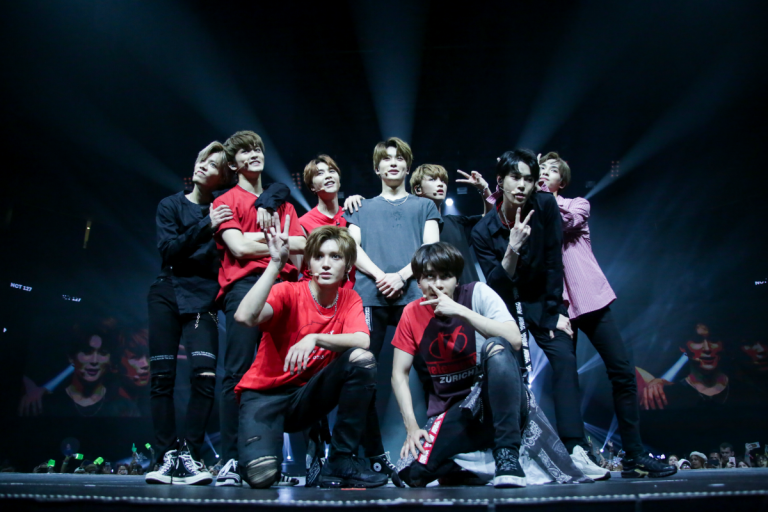
NCT 127 Reflect on Growing as a Group, Spreading K-Pop at KCON 2018 NY

0
CJ Entertainment

Officially, NCT 127 was not the headliner of KCON 2018 New York, but the intricate setlist and crowd screams would have made one think otherwise. Kicking off with an intense dance introduction, pin-point performances of singles like “Touch” and “Cherry Bomb,” and even a special rendition of their 2017 b-side track “Whiplash,” the boy band delivered one of the longest sets of the fest and left an audibly obvious impact on the Prudential Center arena. The scene-stealing showcase marked the latest step in NCT 127’s steady trajectory to more American visibility that recently included stops at Beats 1 radioBUILD Series, and even a live Apple Store performance.

Talking to Fuse the morning ahead of the set, the nine members reflected on their growth in the past year, where they see their band going in the future and the love that they have for the other members in their NCT brand.

FUSE: NCT 127 is back in America! We first talked to you at KCON New York last year, your first U.S. show, so how are you feeling a year later?
Taeyong:
It’s similar. What we’re feeling is very similar, but now we’re headed towards new goals in what we want to do. We’re always thinking about what kind of songs we need to sing, what kind of performance we need to put on and what’s good to show our fans. So overall, it’s very similar, but it’s always comes down to what’s next to show to the fans.
Mark: One more thing to add to that, like what Taeyong said, we do feel the same way with how thrilled we are to stand in front of our fans and with as much that has happened in the year, we have new things to show to the fans music-wise and performance-wise. We want to show how much we’ve developed as well and so we’re just glad to meet our fans who have waiting for us. We also prepared a new intro for “Touch” and it’s a lot stronger than what people are expecting, it’s going to be the first thing that everyone sees. We also have three members perform one of our new songs “Whiplash” so people can look forward to something new.

It really does feel like you guys are leading this kind of “new generation of K-pop,” as they say. Do you guys feel this yourselves?
Taeyong: Rather than being able to feel that we are leading this new generation, we feel that K-pop as a genre is at the forefront of attention around the world. We have to try really hard as just one of the K-pop artists in this genre and we feel like we need to really just do our best within this genre. But I think we’re going to be in every spot in the whole wide world.

Recently, you participated in the Empathy album by NCT that included a song and video performed by NCT 2018 with all 18 members in the band. What is a video shoot like that like?
Haechan: All the members were involved and because there are so many members we had to concentrate a lot harder and there were a lot more things to pay attention to. But because we tried hard, the end result was actually a lot better. In regards to atmosphere of the music video, because everyone was there it was actually really great. Everyone was feeling great and, in general, it was just good. 

We saw you in Los Angeles recently performing and doing interviews. Now you’re back in New York. Is the US more of a priority for NCT 127 this year? 
Taeyong:
Yes!
Johnny: [Clarifying] I feel like we are always getting ready to come out to wherever, even America, even anywhere else, because NCT 127 as a team is a group that starts in Seoul and we want to spread out into the world just to tell everyone what K-pop is. We want to show everyone what NCT 127 is, so we’re always ready to come to America—come to anywhere, practically!

You also recently made your debut in Japan and fans are hoping for news about a Korean comeback. What are you working on right now?
Jaehyun:
We are always preparing new songs, new performances, and I hope we have more opportunities to meet more fans like over the world. I think we are always ready.
Mark: We actually don’t know the exact date or anything [in regards to new Korean music], but I feel like we are always getting ready to kind of like make something, you know, to get back to our fans as quickly as possible. [We’re involved with] every angle of the preparation, we’re just trying to interact with the music. We are working on it. 

“I ask fans to keep their expectations high for the group.”

— NCT’s Taeyong

KCON has a great lineup this year including some of your label mates like Super Junior and Red Velvet. But if you bring on one more artist to the lineup, who would you bring?
Taeyong: There are a lot of different artists in SM Entertainment, and there are a lot of our seniors in SM, but because there are a lot of our members in NCT, I think we would really like it if we could perform at KCON with the other members of NCT. 

And do you have a message to the fans that are reading around the world and that may not get to see you as often as other areas of the world?
Johnny:
So, first off, I would like to say thank you for always, I guess like, always rooting for us and supporting us. We are always working on something to show you guys, so I hope you guys are always ready to come out and be like, “Whoa, NCT is finally back!” 
Taeyong: We’re really happy that we can, once again, meet all our fans in New York and we want to continue to make great memories with our fans. NCT is going to continue to grow as a group, and I ask fans to keep their expectations high for the group.

Juanita Stein Delivers a Brilliant Performance at NYC Show

0
Juanita Stein first caught the attention of many in 2006 when she appeared in the band Howling Bells in a performance of the single “Setting Sun” at the London club Koko. This performance was broadcast as part of the live music program London Live. The Howling Bells self-titled project is quite sensational and you can easily get engrossed in the sound. Specifically, the single “Broken Bones” is an outstanding single. Howling Bells are actually of Australian origins and are based in England. They initially started in Australia with the name Waikiki. They went a different direction at the time and with excellent releases like “New Technology” and “Complicated” added to the 2002 album titled I’m Already Home. Last year, Stein, a resident of Brighton who is originally from, Sydney also put out her solo project which is an outstanding collection of 11 tracks. This album was titled America. This year she dropped another great album made up of 10 tracks titles Until The Lights Fade. She is currently engaged in a series of shows in the United States to promote her album and the following tour brought her and her brand to the forefront. She had her first ever solo performance with her show in Pianos on Ludlow Street in New York. Stein’s brother, Joel Stein who is a bandmate of the Howling Bells and Waikiki is the lead guitarist in his sister’s band on her tour and he kicked off the event with an outstanding 20 minute solo set. Performing under the band name Glassmaps with Joel Stein accompanying Him on the electric guitar. They performed singles from the brilliant Strangely Addicted album. Stein took center stage for her headline show at 9 pm prompt. She and her incredible band made up of her and her brother Joel on the guitar, Tim McNally on bass, Alex Pitt on the drum, opened the set with “All The Way” from the latest album. It is a soft song that shines the light on Stein’s beautiful vocals and it was dedicated to Stein’s grandmother who fled from war ravaged Eastern Europe in search of a better life in Australia. Stein and her band concluded their run of shows in the United States with concerts in San Diego on Wednesday November 7th and the next day in Los Angeles. They then went back across the Atlantic for two concerts in The Netherlands, one in Paris, nine others in the UK including places like Brighton. You can get more information on Stein’s live shows and details of ticket and RSVP on the website https://www.juanitastein.com/live/ Stein’s project Until The Lights Fade is going to be reviewed at the end of 2018 but it goes on sale in the USA on Tuesday November 6th at Barnes & Noble, Books A Million and other select stores.

List of Websites you have to know as an Indy artist

0
This is the age of the Indy artist doing it all on his own without the backing of major labels and a team of people pushing your agenda. As an Indy artist, you have to do everything yourself and fortunately, with Google, you have at your fingertips a host of incredible resources and websites that can help you out in your journey. Whatever your needs may be, be it distribution, presence or marketing, the internet is here to serve you. Here is a list of websites that will definitely be useful for you in your independent journey: Distribution Websites: These are websites where you can distribute your content. You don’t need the backing of a major label to get your music on iTunes, Spotify, Google Play, Apple Music or Tidal. You can do this on your won. The websites below will assist you in doing this and ensure you get your income for your hard work, each website has its own terms and conditions so be sure to read them carefully. TuneCore www.tunecore.com CD Baby www.cdbaby.com DistroKid www.distrokid.com SoundCloud www.soundcloud.com Bandcamp www.bandcamp.com Audiomack www.audiomack.com BitTorrent Now now.bt.co RIV www.rivnow.com Mixtape Distribution DatPiff www.datpiff.com Spinrilla www.spinrilla.com Mixtape Monkey www.mixtapemonkey.com Streaming and Analytics: If you want to have detailed information on the demographic that is listening to your music and engaging with your content, you need these websites to help you out: NextBigSound www.nextbigsound.com Spotify for Artists artists.spotify.com Apple Music for Artists artists.apple.com Shazam for Artists www.shazam.com/artists SoundCloud Pro www.soundcloud.com/pro Pandora AMP amp.pandora.com Rights, Licensing and Royalties When you have your music out there and you have it copyrighted, every single time it gets played, you as the artist should get paid for it regardless of where that is. It could be at a bar or at a major service such as Spotify. Music distributors like CD Baby, TuneCore and DistroKid a large chunk of the money for you but you can still get more out there. These websites below will help you get yours: ASCAP www.ascap.com BMI www.bmi.com SESAC www.sesac.com SoundExchange www.soundexchange.com SongTrust www.songtrust.com Submit your music to blogs You can also send your music to blogs or make use of services that link you to journalists and DJs. A lot of these services will also give you feedback on your music: SubmitHub www.submithub.com HumanHuman www.humanhuman.com/campaigns Emusician www.emusician.com/advisor Fluence www.fluence.io StoryAmp www.storyamp.com Create your own website You need a website in your journey and it is a crucial tool to have in this digital age. This is a place where you upload all of your music, sell merchandise and give fans an insight into your personality and your brand. Websites are easy to leverage as soon as you have the funds to make it happen: Squarespace www.squarespace.com Wix www.wix.com Weebly www.weebly.com Performance Opportunities You can also get bookings for shows and festivals with certain services online. You don’t have to go through booking managers and all their hassles. SonicBids is one excellent example of a site where you can get this done. SonicBids www.sonicbids.com

How to Craft An Excellent Band Pitch for 5 Different Types of Media Outlets

0
In the music industry, the press is always a band’s destiny helper. For this reason, many celebrities (musicians, actors, and comedian) often believe erroneously that “any press is good press.” Wrong. This is far from being the truth. Your fans will quickly get bored if you keep shunning out same content they are already familiar with about you on the different media. You need to tell your band’s story in a way that new listeners will be attracted and your existing fans drawn closer. If this sounds like a great idea to you and you’re looking for ways to tailor your band’s story to maximize the chances of getting featured by five types of media outlets, this post will come handy for you. Let’s find out how:
  1. Newspaper
Chances are, you’re not the only one rolling out a new album soon. Thus, it is imperative that you leverage your local newspaper to reach out to a wider audience. You can do this by identifying the journalist who writes about music for your local newspaper. You can connect with them few days or weeks before dropping your album or stage your next big show. However, you must be prepared to answer tough questions beyond mere statement like “Hey, this band has a new album coming soon.”
  1. Magazine
In case you live in a fairly larger city, you may want to make use of a lifestyle magazine covering your city. If you have an upcoming album or big event, any of these periodicals can come handy for you. However, you should be aware that magazines often plan their content several weeks or months ahead before publication. Therefore, you should reach out to relevant magazines as soon as the date for the release of your CD or big event is set. Magazines can tell your band’s story from an angle a newspaper may not be able to touch due to the pressures involved in daily reportage.
  1. Alt weekly
This class of publications can serve as a goldmine to bands willing to reach out to their fans. This is largely because they can take those chances that other media outlets won’t bother to take. So, if your band regularly hangs out at a neighborhood bar till say 2:00 a.m. in the morning after practice, you might find a music writer with an alt weekly to help tell your story from a fresh angle. Such writer can bring in a new perspective on how the lyrics of your songs resonate with the ongoing political turmoil.
  1. TV and/or radio
Television and radio stations in local neighborhoods are often under pressure to fill their time with reasonable content. These media can be helpful for you. They can give you the opportunity to get a great deal of exposure through live interview or live performance in the studio. This simple exposure can make your audience to look forward to your next album or upcoming events.
  1. Blogs
The web is a hub of opportunities. Blogs offer you greater exposure opportunities than other media. Online media allow you to publish a performance filmed at an unusual location to create the sensations and excitements that will make your fans to long for more.

The Vapors rock the NYC stand with outstanding performance at the Mercury Lounge

0
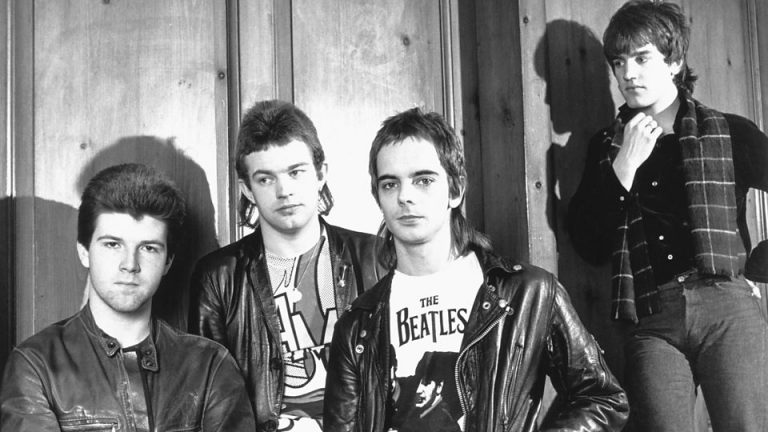
The Vapor’s first performance in New York City since 1981 was a huge success. The concert which held at the Mercury Lounge in Manhattan on Friday 19th October through to Sunday 21st October was made feasible by crowdfunding efforts of interested stakeholders. The band is looking to do a more extensive North American tour very soon. The last show on the Sunday was truly glorious. Kicking off the show on October 21st was the excellent group called The Split Squad. This band is made up of experienced and talented musicians. Eddie Munoz, the renowned guitarist and Keith Streng with the Plimsouls and The Fleshstones respectively. Clem Burke, the excellent drummer from Blondie was also part of the group. Michael Giblin, the bassist with Parallax Project and Josh Kantor, the keyboardist for Big Jim’s Ego and The Baseball project. All of these people came together to deliver a truly excellent show. They played for 45 minutes and the crowd enjoyed every bit of it. They are well knit outfit and they complement each other exceedingly well. Fans close to the stage had their eyes on them all through the show as they didn’t know when Streng would spontaneously jump off the stage unto the floor to rock his guitar. The Split squad kicked off their set with a wonderful version of “Superman Says” which was originally written with Scott McCaughey and is included in their first album Now Hear This. They followed this with a performance of Hey DJ which was a criticism of what radio has turned out to be. This song will be on their next project. All of the songs that The Split Squad performed on the day just highlighted how closed knit and tight they all are and how well they work together. The Vapors are known for their 1980 hit single “Turning Japanese” and they were discovered by The Jam’s bassist Bruce Foxton. Foxton eventually co managed the band with John Weller. The Vapor had two albums that were packed with the band’s style of sharp and spiky pop. One in 1980 titles New Clear Days and the other in 1981 titled Magnets. The band eventually went their separate ways in 1981 and got back together in 2016. Dave Fenton, singer, songwriter and guitarist was a part of the reunion alongside Steve Smith, bassist, Ed Bazalgette, guitarist, and Micheal Bowes, drummer. The original drummer in the group, Howard Smith turned down the opportunity to be a part of the reunion. Bazalgette was also indisposed as he had other commitments so Dave Fenton’s son, Dan Fenton took up the role of the lead guitarist. The Vapors performed before a screen where the band logo was projected and they kicked off proceedings with their highly anticipated set with the bass heavy version of “Bunkers”. Dan Fenton made his mark immediately as the lead guitarist. Following this performance was the “Live At The Marquee” which had beautiful guitar interplay between the Fentons. A host of other hit songs were performed subsequently that had the crowd in very good spirits. The Vapors are set to return to their native UK where they will be performing in November and December in places such as Criccieth, Margate, Lewes, Southampton and London. They also have an event set for March at the O2 Kentish Town Forum in London. You can get information on their live schedule from their official Facebook page https://www.facebook.com/TheVaporsOfficial.

PENNAN BRAE “Shoot for the moon and if you miss you will still be among the stars”

0
Pennan Brae’s music is loaded with the 1970s shade, which is driven by the roaming pedal steel guitar. His 4th album, ‘The Astronot’, with its 11 songs serves as a soundtrack for the sequel film, ‘The Astronot.’ Apart from being the writer and co-producer, Pennan also acted in ‘The Astronot.’ Biography “Shoot for the moon and if you miss you will still be among the stars” Pennan Brae is a singer/songwriter. He is based in Vancouver. His life exemplifies the above quote. As an artist, he decided to take unusual risks during the makings of his fourth album and the results were a surprising fulfillment of his aspirations. He created an incredible career for himself, not only in music but as a rounded independent artist in the entertainment industry. Brae looks back to his past and says “As a kid, I was fascinated by pictures of the planets, solar system and galaxies.” He continues that, “The space picture books of the 1970s really captured this. It was the tail end of the NASA moon landing missions and there were so many books for kids to read. The color of the pages and pictures; I don’t know what was in their ink, but the illustrations seemed so majestic.” This was the mindset that later birth ‘The Astronot’. It is the beginning of another idea. We’ll get to that later. The film was produced mainly in Blue Light Studio in Vancouver by Producer Kaj Falch-Nielsen. Other additional sessions was filmed in Los Angeles with renowned drummer Steve Ferrone. In retrospect, Brae says “Hearing Steve Ferrone lay down the drums and Garry Gary Beers adding bass on “Walk with Me” and “Crashland” is the highlight of my career. When I was younger, I used to watch Steve drum on Eric Clapton’s 24 Nights at the Royal Albert Hall, which I had on VHS. With Garry, I was a big INXS fan in high school. They are an original band with an original sound and one of the all-time greats.” Composer and producer Eric Alexandrakis served as a mentor and one of the producers on THE ASTRONOT, and it was he who brought in Steve and Garry. “Working with Steve and Garry is such an honor. These are my musical heroes, it still hasn’t fully sunk in that I had the chance to record with them.” Just like most of the books Pennan read as a child, ‘The Astronot’ has a touch of the 70s. Aside from the ear-worm worthy tracks arising from incredible guest performers and deft instrumentation that dominate ‘The Astronot,’ there’s something else to the music. It births the idea that finally led to the making of a feature length movie, also tagged THE ASTRONOT. The music serves as the soundtrack to the movie. ‘The Astronot’ brought the progressive change and opportunity that Pennan Brae had been craving. “This release is special because it represents growth. We tried many different arrangements and recorded with different instruments and musicians. It certainly feels like a departure from my earlier three albums. My goal was to write an album instead of a group of separate singles. I wanted this record to flow from song 1 to song 10, and I think we did that. I hope that listeners enjoy hearing it unfold,” he concluded.

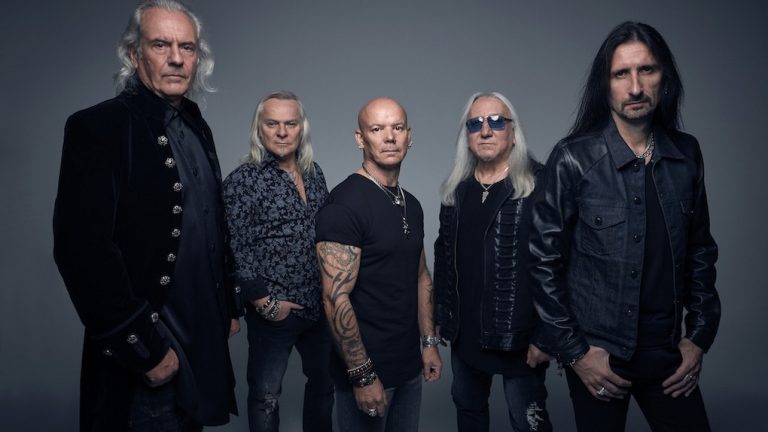
‘Living the Dream’ from Uriah Heep: One of the Best Albums of 2018

0
It is a common believe that masterpiece album such as this would knock off one star. After all, we are no longer in 1973. However, Uriah Heep’s ‘Living the Dream’ defies all odds. The album delivers an almost evangelical show of classic prog metal with no weak links at any of the corners. In fact, the bass and drums (the youth contingent), killer Hammond-mad keys, smiling Buddha guitar or, hardest to maintain, vocals and front duties, were classic performances against the rules of physics. This might sound unbelievable, but I had to resist the one-star docking due to the fact that the band’s go beyond live shows to indicate that the electric chemistry that’s all over Living the Dream is real. Thus, Living the Dream, the band’s 25th album in 49 years of existence, exhibits a collective demonstrations on fire and in tune with their base as showcased in the band’s over 125 shows a year, thereby providing global inspiration. There are numerous comparisons. Foremost, producer Jay Ruston (Black Star Riders, Stone Sour, Winery Dogs, Europe) was able to capture the band lively, high-fidelity and old school within that fidelity. Yet, without any distractions from the purity of the instrumentation, which was the only output with the use of a half dozen keyboard directives from Phil Lanzon, including a similar mélange from guitarist Mick Box, who is an original member and anchor of the band. Meanwhile, there are certain spirited jams, which may exist for back half of the eight minute-long “Rocks in the Road” — which mirrors the live events by Heep dubbed “The Magician’s Birthday,” as well as the most pertinent, raucous, and relentless drums from Russell Gilbrook. Today, I can boldly say, Gilbrook is the modern-day Heep. He’s the force driving his cohorts to excel. He regularly whacks double bass with a constant shower of crash cymbals which functions as rides. Classically, he tears off a “Hot for Teacher” shuffled deep in the sequence to deliver “Goodbye to Innocence,” a fast-pacing Purple party blues that injects a new dimension into a record known to be stuffed with the band’s soul-replenishing Yes-like positivity and choruses filled with sublime hooks for miles. All these pointed to the fact that all those Purple comparisons will linger on. Though, that’s no slag. The two bands are still waxing strong with more great records, even in recent times. It’s all about one guitar battling with a grinding Hammond, progressively, with note-density as well as circular logic and resolution. If you add a little Kansas, with Led Zeppelin, Rainbow as well as massive reverence to classic, Heep moments such as “Easy Livin’” and “July Morning,” inclusive of what we get with “Living the Dream” will pass as an album that can be considered the strongest of the fine spread starting with the 1995’s Sea of Light return. This comes after a couple wobblers in Raging Silence and Different World, which are Bernie’s first two with the band. Sure, it was a sweet suite, but there’s a uniqueness about Living the Dream that makes the band to keep putting aside any of their recent technological or stylistic nods into it to make it timeless.